Why Your TELUS eSIM Transfer Not Supported and How to Overcome This Hurdle
Understanding telus esim transfer not supported
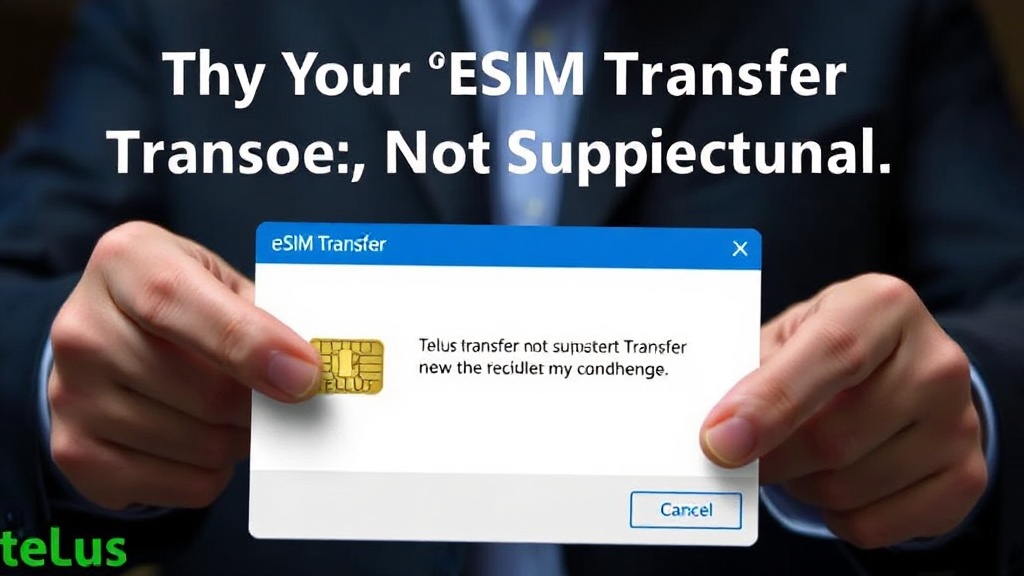
Have you recently tried to transfer your TELUS eSIM to a new device only to encounter the message that telus esim transfer not supported? You’re not alone. This frustrating notification can leave many users puzzled about what went wrong and how to fix it. The reality is, the telus esim transfer not supported issue often stems from specific technical or account-related restrictions, which can vary depending on the device, plan, or even regional policies.
Understanding why your telus esim transfer not supported appears is crucial. It helps you determine whether it’s a temporary glitch, a device incompatibility, or a policy restriction. This article aims to clarify the common causes behind this problem and guide you through effective solutions to successfully transfer your eSIM, avoiding the common pitfalls associated with telus esim transfer not supported messages.
Whether you’re switching devices or troubleshooting a transfer failure, knowing the underlying factors can empower you to resolve the issue swiftly. Let’s explore the primary reasons why your TELUS eSIM transfer might not be supported and what steps you can take to overcome this hurdle.
Common Reasons for telus esim transfer not supported
Understanding the root causes of telus esim transfer not supported is essential before attempting a resolution. Several common issues contribute to this problem, and identifying them can save you time and frustration.
**Device Compatibility Restrictions:**
Not all devices support eSIM functionality uniformly. If your new device isn’t fully compatible with TELUS’s eSIM system, you’ll likely encounter the telus esim transfer not supported message. For example, some older phones or budget models may lack the necessary hardware or firmware updates.
**Account or Plan Limitations:**
Certain plans or account types may restrict eSIM transfers. For instance, prepaid plans or corporate accounts may have specific policies preventing seamless transfer, leading to telus esim transfer not supported errors during the process.
**Regional or Network Restrictions:**
If you’re attempting to transfer your eSIM across regions or networks with differing policies, TELUS’s system may block the transfer, citing telus esim transfer not supported. This is especially prevalent when moving between Canada and international regions.
**Security and Activation Policies:**
TELUS employs certain security measures to prevent unauthorized eSIM transfers. If your account has pending security verifications or if the device isn’t properly activated, the system might reject the transfer, resulting in the telus esim transfer not supported message.
**Technical Glitches or System Errors:**
Sometimes, the problem isn’t on your end but stems from TELUS’s servers or app glitches. During system updates or maintenance, users may experience temporary telus esim transfer not supported notifications.
**Comparison of Transfer Scenarios:**
– *Successful Transfer:* When all conditions—device compatibility, plan eligibility, and account status—align, the transfer proceeds smoothly.
– *Blocked Transfer:* If any restriction exists, the system halts the process, often indicating telus esim transfer not supported.
Research shows that most transfer failures are due to compatibility or account restrictions rather than technical errors. Recognizing these causes is the first step toward resolution.
How to Address telus esim transfer not supported
Once you’ve identified the potential causes behind the telus esim transfer not supported message, the next step involves strategic actions to resolve the issue. The key is to approach the problem systematically, ensuring compatibility and compliance with TELUS policies.
**Initial Troubleshooting Steps:**
– Verify your device supports eSIM functionality and is compatible with TELUS.
– Confirm your plan allows eSIM transfers; some prepaid or corporate plans may have restrictions.
– Check your account status for any security alerts or pending verifications.
– Ensure your device’s software is up-to-date, as outdated firmware can hinder eSIM transfer capabilities.
– Review regional policies—transfers across borders may be limited or require additional steps.
**Contact TELUS Customer Support:**
If self-troubleshooting doesn’t resolve the telus esim transfer not supported message, reaching out to TELUS support is advisable. They can clarify whether your account or device has restrictions and guide you through specific procedures.
**Use Official TELUS Apps and Porting Tools:**
TELUS offers dedicated apps and online portals for eSIM management. Utilizing these tools ensures you’re following the supported transfer processes, reducing the likelihood of encountering telus esim transfer not supported errors.
**Check for Device and Firmware Compatibility:**
Some devices require specific firmware versions to support eSIM transfers. Confirm your device meets TELUS’s specifications and update if necessary. For example, newer iPhone and Android models typically have better eSIM support, but older models might face limitations.
**Consider the Regional Policy Differences:**
If you’re attempting to transfer your eSIM internationally, verify with TELUS whether your region permits such transfers. Sometimes, restrictions are region-specific, and understanding these nuances helps prevent unsupported transfer issues.
The main takeaway here is that addressing telus esim transfer not supported involves confirming device compatibility, plan eligibility, and account security. When in doubt, TELUS support is your best resource for tailored assistance.
Step-by-step Solutions to Overcome the Issue
Facing the telus esim transfer not supported notification can be daunting, but following these structured steps can help you turn the situation around:
- Verify Device Compatibility
Check if your device supports eSIM technology and is officially listed as compatible with TELUS services. For example, recent iPhone models (iPhone 14, 15) are generally supported, whereas older Android phones may not be. - Update Device Firmware
Ensure your device’s operating system and firmware are current. Manufacturers release updates that often enhance eSIM functionalities, reducing transfer errors. - Check Your Plan and Account Status
Confirm that your plan allows eSIM transfers. Prepaid plans or certain corporate accounts might restrict this feature. Also, verify your account isn’t flagged for security reasons. - Use Official TELUS Tools
Access the TELUS My TELUS app or online portal to initiate the transfer. These platforms are designed to support eSIM management and help avoid telus esim transfer not supported issues. - Contact Customer Support
If the above steps don’t resolve the problem, reach out to TELUS support directly. They can provide specific insights and may perform account or device checks to enable the transfer. - Request a New eSIM Activation
Sometimes, the issue requires issuing a new eSIM profile. TELUS support can guide you through this process, especially if the current profile is corrupt or incompatible. - Compare Device Compatibility
– *Before:* Device incompatible or outdated firmware.
– *After:* Device supported with updated firmware, enabling smooth transfer.
This comparison highlights the importance of hardware and software readiness in avoiding telus esim transfer not supported.
By systematically following these steps, most users can resolve the telus esim transfer not supported obstacle and enjoy seamless device switching.
Additional Tips and Troubleshooting
Even after following the main steps, some users encounter persistent telus esim transfer not supported messages. Here are additional tips to troubleshoot and improve your chances of success:
– **Try Transferring via Different Devices:**
Sometimes, the device itself is the limitation. Attempt the transfer on a different supported device to isolate the issue.
– **Clear Cache and Data in Apps:**
If using the TELUS app, clearing cache or reinstalling can eliminate bugs that interfere with the process.
– **Disable VPNs or Security Apps:**
VPNs or security apps might block certain transfer protocols. Temporarily disable them during the transfer process.
– **Check for Ongoing Network Maintenance:**
TELUS periodically updates its systems. Confirm if there are scheduled maintenance activities that could temporarily restrict eSIM transfers.
– **Compare Transfer Policies Across Carriers:**
If transferring from another carrier, confirm compatibility and transfer policies. Some carriers may have stricter restrictions resulting in telus esim transfer not supported errors.
– **Document Your Attempts:**
Keep records of error messages, device info, and steps taken. This documentation expedites support interactions and clarifies the problem.
Ultimately, patience and thorough troubleshooting are key. Persistent issues may be due to policies or technical nuances that require direct intervention from TELUS support.
References and Resources
These resources provide valuable information about telus esim transfer not supported. Check them out for additional insights:
Authoritative Sources on telus esim transfer not supported
-
TELUS eSIM Support and FAQs
telus.comOfficial guidance on eSIM activation, transfer policies, and troubleshooting for TELUS customers.
-
Apple Support: eSIM Setup and Transfer
apple.comDetails on device compatibility and transfer procedures that are relevant when troubleshooting telus esim transfer not supported.
-
Android eSIM Support and Transfer Tips
android.comGuidelines on eSIM compatibility and transfer processes compatible with TELUS and Android devices.
-
FCC: eSIM & Mobile Device Regulations
fcc.govRegulatory insights on eSIM policies across North America, including restrictions that could impact telus esim transfer not supported.

-
TechRadar: Guide to eSIM Technology
techradar.comIn-depth articles explaining eSIM technology, including common transfer issues and troubleshooting tips.
-
Mobile World Live: Industry Updates on eSIM
mobileworldlive.comLatest industry trends and policy changes affecting eSIM transfers, including those relevant to TELUS users.
Conclusion
The challenge of telus esim transfer not supported can be frustrating, but it’s often resolvable through understanding compatibility, account policies, and proper procedures. Recognizing the common causes—such as device limitations, regional restrictions, or account security—and following systematic troubleshooting steps significantly increases your chances of a successful transfer.
Ultimately, the key lies in preparation and communication. Ensuring your device is compatible, your plan supports eSIM transfers, and consulting TELUS support when needed can help you overcome this hurdle. Remember, patience and proper guidance are essential. With these strategies, you’ll be better equipped to navigate the complexities of telus esim transfer not supported and enjoy seamless connectivity on your new device.
Find out more information about “telus esim transfer not supported”
Search for more resources and information: